
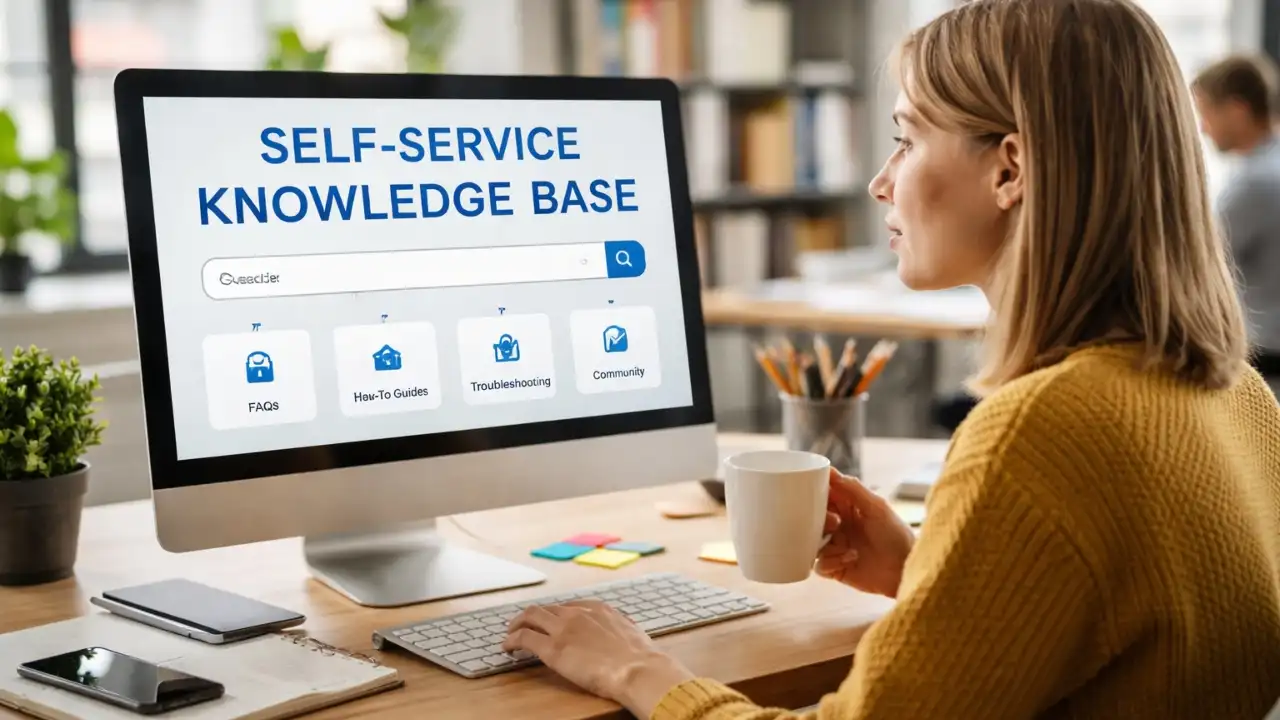
In an age where quick resolution to problems is not just preferred but expected, self-service knowledge bases step in as a savior. A staggering 70% of consumers expect a company to have a self-service portal, indicating the importance of this resource. By tapping into a well-maintained knowledge repository, users can resolve issues without the delay of interacting with customer service representatives.
A self-service knowledge base not only facilitates instant solutions for users but also serves as a strategic tool for organizations aiming to improve customer satisfaction and operational efficiency. Below, we discuss how integrating a self-service knowledge base into your service offerings can significantly benefit both your users and your business processes.
Leveraging Self-Service Knowledge Bases for Immediate Problem-Solving
Self-service knowledge bases are a linchpin in customer autonomy, empowering them to address concerns at warp speed. By providing immediate access to troubleshooting guides, FAQs, and informative articles, these platforms enable swift problem resolution. This immediacy is crucial in an era where even a minute’s delay can lead to frustration and lost revenue.
Organizations have recorded a reduction in support ticket volumes by up to 25% upon implementing self-service options. This significant statistic highlights the direct impact such resources have on alleviating the pressure on support staff and improving service response times for more complex issues requiring personalized attention.
benefits of self-service knowledge base To ensure users can effectively solve their problems, it’s vital to keep the knowledge base updated with accurate, straightforward, and easily searchable content. Regular analysis of the most common inquiries can guide the continual refinement of the knowledge repository, making it increasingly valuable over time.
How Self-Service Knowledge Bases Empower Users and Enhance Efficiency
When users are equipped with the right tools to help themselves, they become more confident and satisfied with the service. The empowerment stemming from effective self-service resources can lead to higher levels of customer retention rates, with companies witnessing up to 85% of customer interactions resolved without human assistance.
Training and guided pathways within these platforms can significantly contribute to this empowerment, allowing users to develop their own expertise. This fosters a more engaging relationship between users and the services or products offered, as customers feel more involved and capable.
Businesses looking to harness the full potential of their self-service knowledge base should aim for intuitive design and clear navigation. Providing users with a platform that is as user-friendly as it is informative will translate to a seamless, effective self-help experience. Key performance indicators such as user engagement metrics can help measure and improve the effectiveness of the platform.
Minimizing Downtime with Instant Access to Information
A robust self-service knowledge base is pivotal in minimizing the downtime associated with seeking help. Instant access to information not only applies to external customers but also to internal teams who often rely on quick reference materials to maintain productivity amid challenging scenarios.
In a survey, over 40% of internal service requests were resolved via self-service options, illustrating the significant reduction in employee idle time. This factor underlines the importance of having a comprehensive knowledge base that caters not only to external users but also to employees who need expedient solutions to carry on their work.
To minimize downtime effectively, companies need to design their self-service knowledge bases with a focus on mobile responsiveness and ease of navigation. Ensuring the availability of up-to-date, relevant data across all devices is key to providing uninterrupted access and continuity in operations.
Streamlining Operations with an Effective Self-Service Knowledge Strategy
An intelligent self-service knowledge strategy is fundamental for streamlining business operations. It allows for a more efficient allocation of resources by reducing the demand on customer service representatives, allowing them to focus on more complex queries that require a human touch.
Prioritizing the user experience and adopting a strategic approach to content management can lead to improved customer service metrics. A study found that companies that implemented a strategic knowledge management approach saw a 20% increase in customer service efficiency. Businesses should structure their self-service content to mirror the customers’ thought processes, making information easy to find and understand.
Lastly, maintaining an ongoing dialogue with users to gather feedback and performance data is crucial for refining a self-service knowledge base. This continuous improvement ensures that the system stays relevant and effective, promoting operational excellence and meeting the evolving needs of users. Pairing this insight with customer journey analytics is a powerful way to keep your strategy sharp and impactful.
Overall, self-service knowledge bases are a testament to the empowerment and efficiency that innovative technology can bring to customer service. From providing instant problem-solving capabilities to streamlining operations and enhancing user autonomy, the value offered by these tools is immense. As organizations continue to enhance their knowledge bases, they contribute to a more productive, satisfied, and self-reliant customer base—a win-win for both the company and its customers.
For more informative articles, visit our site daily
Regards