
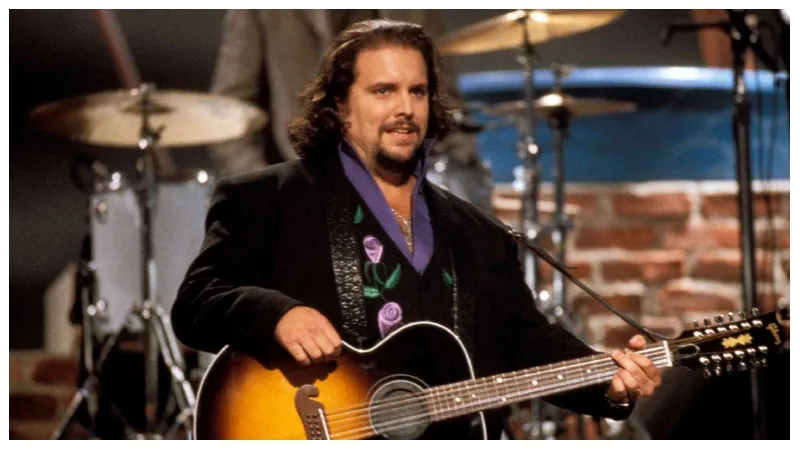
Raul Malo was an American singer, songwriter, guitarist, and record producer best known as the frontman of The Mavericks, the genre-defying group that blended country, rock, Latin music, Tejano, swing, and Americana. Over a career spanning more than three decades, Malo built a reputation for his powerful baritone voice, sophisticated songwriting, and ability to move comfortably between musical traditions.
Malo died on December 8, 2025, at age 60, following a battle with cancer. His death brought renewed attention to his remarkable career, including his work with The Mavericks, solo recordings, collaborations, and the financial success he accumulated through decades in the music business.
Because Malo did not publicly release detailed financial statements, estimates of his wealth vary. One widely cited estimate placed his net worth at approximately $10 million around the time of his death. That figure should be treated as an estimate rather than an independently verified financial statement.
Early Life and Background
Raul Francisco Martínez-Malo Jr. was born on August 7, 1965, in Miami, Florida, to Cuban immigrant parents. Growing up in a Cuban-American neighborhood strongly influenced his identity and eventually became one of the defining elements of his music.
Music surrounded Malo from childhood. In a later NPR interview, he explained that his family listened to a remarkably broad selection of artists, ranging from Hank Williams and Celia Cruz to Sam Cooke and Bobby Darin. Rather than separating musical styles into strict categories, his family treated music as something to enjoy across cultural boundaries.
That upbringing helped explain why Malo never fit comfortably into a single genre. He grew up with Spanish-language music at home while absorbing American country, rock, soul, and pop. His bilingual background later became an important part of his artistic identity.
Malo once described himself as a first-generation Cuban American whose childhood involved speaking English in everyday life while also speaking Spanish with his grandmother. That combination gave him a perspective that was unusual in mainstream country music at the time.
Education
Detailed information about Raul Malo formal education is not widely documented in reliable public sources. Unlike some musicians who have discussed conservatory or university training at length, Malo’s public biography focuses primarily on his musical development, early performances, songwriting, and professional career.
His musical education largely came through exposure, experimentation, performing, and listening. Growing up in Miami gave him access to a diverse musical environment, and his early experiences in local clubs helped him develop the skills that later became central to The Mavericks’ sound.
Career Beginnings in Miami
Before achieving international recognition, Malo spent time playing in Miami’s local music scene. The environment was not particularly friendly to a country-oriented band, but that challenge ultimately helped shape The Mavericks’ unconventional identity.
Malo recalled that the group played original-music clubs in Miami even though country music was not a dominant part of the local scene. The band often appeared in venues associated with rock and punk music, making its mixture of country, rock, and Latin influences even more distinctive.
In 1989, Malo co-founded The Mavericks. The band’s early lineup included drummer Paul Deakin and bassist Robert Reynolds. The group eventually moved toward Nashville, where its unusual musical combination began attracting much wider attention.
The Mavericks and the Rise to Fame
The Mavericks became the central project of Malo’s professional life.
The band’s music challenged the idea that country music had to follow one established formula. Malo’s deep, expressive voice could move from country ballads to rockabilly, Latin rhythms, swing, and traditional pop without sounding forced.
The Mavericks released their debut album in the early 1990s and gradually established themselves as one of the most distinctive groups in American roots music.
Their breakthrough years produced songs such as “What a Crying Shame,” “Here Comes the Rain,” “All You Ever Do Is Bring Me Down,” and “Dance the Night Away.” These songs demonstrated how effectively Malo could combine emotional songwriting with the band’s energetic arrangements.
The group’s success also brought major industry recognition. The Mavericks won a Grammy Award for Best Country Performance by a Duo or Group With Vocal for “Here Comes the Rain” at the 38th Grammy Awards. The Recording Academy also recorded numerous additional Grammy nominations connected with Malo and The Mavericks.
The band’s accomplishments extended beyond the Grammys. The Mavericks earned Country Music Association and Academy of Country Music honors during their career, reinforcing their status as a major force in country and Americana music.
Solo Career and Wider Musical Work
Malo’s creativity was never limited to The Mavericks.
He developed a substantial solo career and released a series of albums that allowed him to explore ideas outside the band’s established sound. His solo work included projects such as Today, You’re Only Lonely, After Hours, Lucky One, Sinners & Saints, and Say, Less.
He also became involved with Los Super Seven, a Latin-rooted supergroup featuring prominent musicians from across American and Mexican musical traditions. His work with the group further demonstrated his ability to move between English- and Spanish-language music.
Malo also explored family-oriented and Spanish-language projects. In 2002, he released el Cancionero de la Familia Volume 1, an all-Spanish children’s music project that included contributions from members of his family.
His interest in Latin American music remained important throughout his career. In 2020, The Mavericks released En Español, an album that combined original material with Latin American standards. The project represented a particularly personal expression of Malo’s Cuban-American background.
Rather than treating Latin music and country music as separate worlds, he showed that they could coexist naturally within the same artistic vision.
Major Achievements and Recognition
Malo’s achievements went beyond commercial success.
The Recording Academy’s records show Grammy recognition for both The Mavericks and Malo’s broader musical work. He received nominations involving the Mavericks, Los Super Seven, and his songwriting.
His songwriting also received industry recognition. One of his best-known compositions, “All You Ever Do Is Bring Me Down,” earned BMI recognition, reflecting the importance of songwriting royalties and publishing to his long-term career.
The Americana community also recognized Malo as a significant artist. His work appeared repeatedly within the Americana Music Association’s awards history, reflecting the lasting influence of his genre-blending approach.
Perhaps his most important achievement was artistic rather than numerical: Malo demonstrated that an artist could embrace multiple cultural identities without reducing any of them to a gimmick.
Personal Life
Raul Malo married Betty Malo, and the couple remained together for more than three decades. They had three sons: Dino, Victor, and Max.
Malo generally kept his family life away from the entertainment spotlight. Raul Malo public interviews tended to focus on music, songwriting, culture, and his work rather than celebrity lifestyle.
His family remained an important part of his musical world. His Spanish-language family project included contributions from his wife, children-related musical interests, sister Carol, and mother Norma, illustrating how closely music and family were connected in his life.
Malo also maintained a strong connection to his Cuban heritage. In a 2020 interview, he discussed his involvement with Cuban musicians and his efforts to help their music reach wider audiences. He viewed music as a way to connect people across political and cultural boundaries.
Raul Malo Net Worth
The question of Raul Malo net worth is difficult to answer with complete precision because he did not publicly disclose a detailed breakdown of his assets, investments, royalties, property holdings, or other financial interests.
A commonly cited estimate places his wealth at approximately $10 million at the time of his death. Celebrity Net Worth and Finance Monthly both reported figures around that level, although these are third-party estimates rather than audited financial disclosures.
His income likely came from several areas of the music industry.
Recording and Album Sales
Decades of recordings with The Mavericks and as a solo artist provided an important foundation for his earnings. His catalog included numerous albums spanning country, Americana, Latin music, pop, rock, and instrumental projects.
Touring and Live Performances
Touring was another major part of Malo’s professional career. The Mavericks became known for energetic live shows, while Malo also performed extensively as a solo artist.
Live performance income can include concert fees, ticket revenue arrangements, festival appearances, and related performance royalties. For an artist with a career lasting more than 30 years, touring represented an important long-term source of revenue.
Songwriting and Royalties
Songwriting was especially significant because Malo wrote or co-wrote many of the songs associated with The Mavericks.
A successful music catalog can continue generating income through streaming, radio play, publishing, licensing, and other uses long after an original recording is released. That means Malo’s songwriting work remains financially relevant even after his death.
Production and Collaboration
Malo also worked as a producer and collaborated with other musicians. His interest in helping younger Cuban and Latin artists demonstrated that his role in music extended beyond performing.
For these reasons, the estimated $10 million figure is best understood as a broad industry estimate rather than a confirmed accounting of his estate.
Final Years and Death
Malo continued working despite serious health problems.
In June 2024, he publicly revealed that he had been diagnosed with colon cancer. He continued contributing to music, including The Mavericks’ 2024 album Moon & Stars, the group’s 13th studio album.
By September 2025, his health had deteriorated, and he announced that cancer had developed into leptomeningeal disease, a serious complication involving the membranes surrounding the brain and spinal cord. He canceled remaining touring commitments to focus on treatment.
Malo died on December 8, 2025, at age 60. His wife, Betty, confirmed his death. He was survived by his wife, three sons, mother, sister, and longtime musical colleagues.
Legacy and Influence
Raul Malo’s legacy is larger than his record sales or financial estimates.
He helped expand the possibilities of American roots music by refusing to treat country, Latin, rock, swing, and pop as isolated categories. The Mavericks’ music reflected the multicultural reality of the United States, particularly the experience of Cuban Americans and other communities whose musical traditions overlap.
His career also challenged assumptions about who could represent country music. Malo was a Cuban American singer from Miami who eventually performed at some of country music’s most prestigious venues and events.
NPR’s retrospective on his career emphasized that his musical identity was rooted in a broad American tradition rather than a single genre. His own comments repeatedly showed that he viewed himself first as a singer-songwriter rather than simply a country artist.
That attitude remains one of the most important parts of his influence.
Malo also left behind an extensive catalog that continues to introduce new listeners to his voice. Songs such as “Here Comes the Rain,” “Dance the Night Away,” and “All You Ever Do Is Bring Me Down” remain central to the Mavericks’ story, while his Spanish-language recordings offer another window into his cultural background.
Conclusion
Raul Malo built a remarkable career by following his musical instincts rather than staying inside a single genre. From his Cuban-American childhood in Miami to the creation of The Mavericks, international touring, Grammy recognition, solo albums, and Spanish-language projects, his career reflected a lifelong interest in bringing different musical traditions together.
Although estimates of Raul Malo net worth vary and no independently verified public figure provides a complete picture of his estate, the commonly cited estimate of around $10 million reflects the financial success of a career built through recordings, touring, songwriting, royalties, and production.
More importantly, Malo left behind something that cannot be measured in dollars. His music created a bridge between country and Latin traditions and helped demonstrate that American music becomes richer when artists are free to embrace every part of their cultural identity. His recordings and The Mavericks’ catalog ensure that his distinctive voice and genre-defying approach will remain part of American music history. For more information, visit our website.