
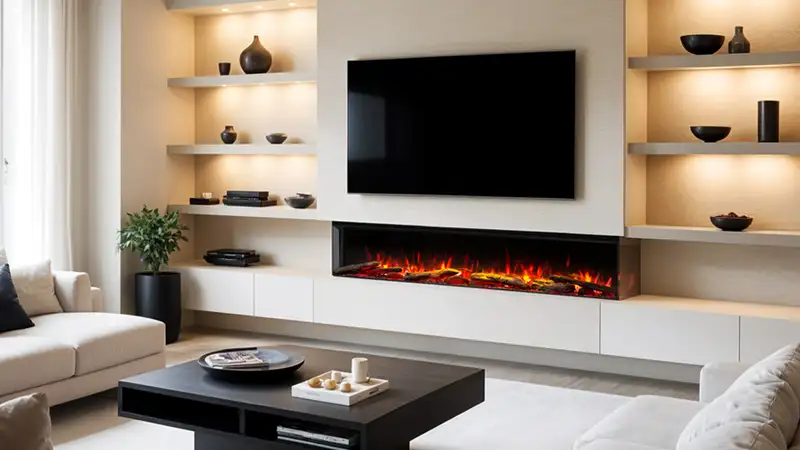
A custom media wall completely changes the look and feel of a living room. By combining a flat screen TV, an electric fireplace, hidden cables, and open shelving into one clean structure, you turn a clutter prone wall into an organized focal point.
While hiring a carpenter can easily cost thousands of dollars, building one yourself drops the price significantly, often keeping materials under eight hundred dollars. Here is a realistic, step-by-step breakdown of how to plan, frame, wire, and finish a stud built media wall.
Planning and Design Choices
Before buying lumber, you need to map out your layout based on the exact dimensions of your components.
Choosing Your Core Components
TV Size Standard 55 inch to 75 inch screens are the most common choice. A widespread mistake is making the recessed niche the exact size of the TV, which leaves no room for hands during installation or cable adjustments. Always leave a couple of inches of clearance on every side.
Electric Fireplace Opt for a recessed or inset linear firebox designed to vent heat from the front. Avoid buying a wall mounted model that vents heat from the top, as that heat will rise directly into your TV framing and electronics.
Soundbar and Audio A dedicated shelf or built in recess works best for soundbars. Take care not to block top firing Dolby Atmos speakers with timber framing directly above the unit.
Layout Recommendations
The center of the screen should sit roughly at eye level from your main seating area, usually 40 to 45 inches from the floor. Do not mount it too high above the fireplace, or you will strain your neck during movie nights. Keep a minimum 8 to 12 inch gap between the top of the electric fireplace and the bottom of the TV niche to keep heat transfer minimal.
Tools and Materials Required
Materials
-
2×3 or 2×4 framing lumber (2×3 works fine for non load bearing accent walls and saves floor space)
-
Half inch drywall sheets
-
Drywall screws (1 and 1/4 inch as well as 1 and 5/8 inch)
-
3 inch framing screws
-
Joint compound and paper drywall tape
-
Metal or vinyl corner beads
-
Primer and interior paint
-
Recessed electrical outlet boxes and flexible conduit
-
Fireplace and TV wall mount bracket
Tools
-
Miter saw or circular saw
-
Cordless drill and impact driver
-
Stud finder
-
Spirit level or laser level
-
Drywall utility knife, taping knives, and mud pan
-
Measuring tape and pencil
Step 1: Laying Out and Framing the Wall
A media wall is simply a timber false wall built directly in front of your existing drywall. It carries no structural home weight, making framing straightforward.
Locate and Mark Existing Studs
Use a stud finder to locate the structural studs on the existing wall. Mark these locations clearly because your new false wall will anchor directly into these points for long term stability.
Install Top and Bottom Plates
Cut two 2×4 plates to the total width of your planned media wall. Fasten the bottom plate directly to the subfloor or through floorboards into joists. Anchor the top plate to the ceiling joists or the wall studs near the top using 3 inch screws.
Build the Outer Frame and Alcoves
-
Cut vertical studs to fit between your top and bottom plates, spaced 16 inches apart from center to center.
-
Frame out the central TV niche and fireplace niche using double horizontal headers for solid support.
-
Measure your TV and add 2 inches of clearance to both the width and height. Measure your electric fireplace cutout specifications from the manufacturer manual and frame that opening to the exact dimensions listed.
Step 2: Running Electrical Work and Cable Management
Never bury standard extension cords behind drywall. Doing so violates standard residential electrical codes and poses a serious fire hazard.
Safe Wiring Practices
Run non metallic building wire from an existing wall outlet to install new recessed duplex outlets inside both the TV niche and the fireplace niche.
Run 1.5 inch to 2 inch flexible PVC conduit or an in wall cable pass through kit between the TV niche and any lower component shelves. This allows you to pull HDMI cables, optical wires, and ethernet through smoothly without tearing up drywall later.
Verify that the electrical circuit feeding the wall can handle the overall power draw. A typical electric fireplace draws around 1500 Watts on high heat settings. If you plan to run it frequently alongside other high draw electronics, wiring a dedicated circuit is the safest approach.
Step 3: Boarding and Drywalling
With framing and rough electrical in place, the timber structure is ready for drywall.
Measure individual sections carefully so that panel joints always align with stud centers. Score the front of the half inch drywall with a utility knife, snap it back, and cut through the paper backing from behind.
Drive 1 and 1/4 inch drywall screws every 8 inches along the edges and every 12 inches across the center field of each board. Sink screw heads slightly below the paper surface without tearing completely through it.
Apply vinyl or metal corner beads to every exterior corner, such as the outer edges of the TV alcove and side shelves. Corner beads give sharp, crisp edges and protect the finished drywall from accidental chips and dings over time.
Step 4: Taping, Mudding, and Sanding
This step determines whether your media wall looks like a DIY project or a polished, professional feature.
Fill seam gaps with joint compound. Center paper tape over each joint and press it firmly into the mud using a 4 inch taping knife, squeezing out any excess compound from underneath.
Apply two thin follow up coats over the tape and corner beads using a 10 inch or 12 inch drywall knife. Feather the edges outwards 6 to 10 inches past the joint line to blend the seams smoothly into the flat board.
Once the compound dries completely, sand everything smooth using 120 grit drywall sandpaper followed by 180 grit for a seamless finish. Shine a bright work light parallel to the wall surface to spot any remaining ridges or hollows before moving on to paint.
Step 5: Painting and Final Installation
Apply a full coat of PVA drywall primer to seal the raw drywall sheets and joint compound evenly. If you skip primer, your finish paint will absorb unevenly, resulting in patchy, dull spots across the wall.
Apply two coats of quality interior latex paint. Matte or eggshell finishes are ideal because they help hide subtle drywall imperfections far better than semi gloss or high gloss paints.
Secure your heavy duty TV bracket directly into the solid timber framing inside the recessed niche. Never rely on drywall anchors alone to hold a television mount.
Finally, mount the TV, slide the electric fireplace into its opening, plug both into their respective recessed outlets, and attach the fireplace front trim plate.
Practical Troubleshooting Tips
If your TV runs warm inside the niche, ensure there is at least 1 to 2 inches of breathing room around all edges for natural airflow, or use an articulated mount that lets you pull the TV forward slightly during extended use.
If your TV bracket mounting holes do not line up with the framing studs inside the niche, install a piece of 3/4 inch plywood across the entire back panel of the TV niche during the framing stage. This creates a solid wood backing that lets you secure the bracket anywhere within the opening.