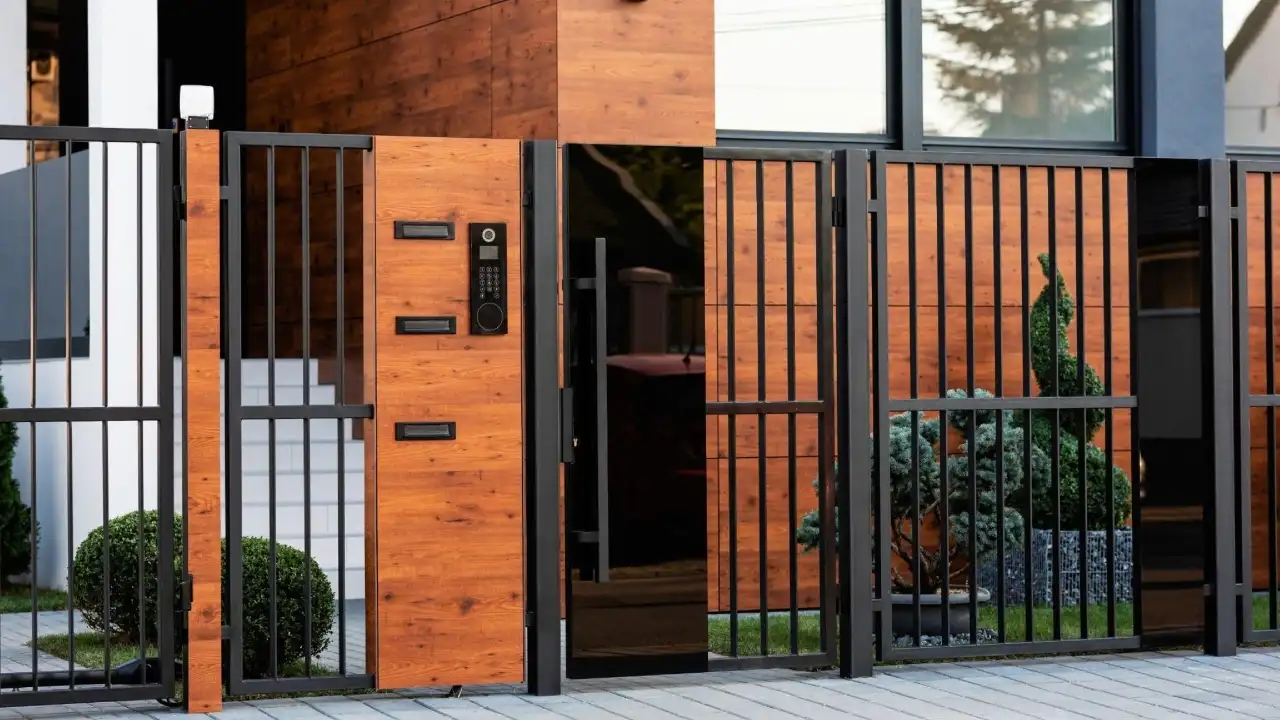
Choosing the right gate for your property isn’t just about appearance, it directly impacts security, usability, maintenance, and long-term reliability. Two of the most common options are sliding gates and swing gates, and while both serve the same core purpose, they operate very differently and suit different environments.
If you’re deciding between the two, it’s important to understand how each system works, where it performs best, and what limitations to consider. This guide breaks it down clearly so you can make an informed choice based on your property layout and needs.
How Sliding Gates Work
Sliding gates operate by moving horizontally along a track or via a cantilever system. Instead of opening inward or outward, the gate slides sideways along the boundary fence line.
This design makes sliding gates particularly effective in situations where space is limited or where the ground conditions aren’t ideal for swinging motion.
Key Advantages of Sliding Gates
One of the biggest benefits of sliding gates is space efficiency. Because the gate moves sideways, it doesn’t require clearance in front or behind the opening. This makes it ideal for:
- Short driveways
- Properties close to the street
- Commercial or industrial sites with tight access points
Sliding gates also perform better on sloped driveways. A swing gate can struggle or require custom engineering on an incline, whereas a sliding gate remains unaffected by the gradient.
Security is another strong advantage. Sliding gates are generally harder to force open because they run along a fixed path and are supported across their entire length. This makes them a preferred choice for commercial facilities, warehouses, and high-security residential properties.
Considerations for Sliding Gates
While they offer clear benefits, sliding gates do require sufficient space along the fence line for the gate to retract fully. For example, a 4-metre opening will typically require at least 4 metres of lateral space.
Track-based systems also require ongoing maintenance. Dirt, debris, and water buildup can affect performance if not regularly cleared. Cantilever systems reduce this issue but come at a higher upfront cost.
Installation can also be more complex, particularly if groundwork or structural supports are needed.
How Swing Gates Work
Swing gates operate on hinges and open inward or outward, much like a standard door. They can be configured as a single gate or a pair of gates (double swing), depending on the width of the entrance.
This design is often chosen for its traditional look and suitability for residential properties.
Key Advantages of Swing Gates
Swing gates are generally more straightforward in design and installation. They don’t require a track, which reduces both installation complexity and ongoing maintenance.
From an aesthetic perspective, swing gates tend to offer a more classic and elegant appearance. This makes them a popular choice for:
- Residential homes
- Heritage-style properties
- Driveways with symmetrical layouts
They are also typically more cost-effective upfront compared to sliding gates, especially for standard installations.
Automation is easily integrated, allowing for remote access, intercom systems, and keypad entry, similar to sliding gates.
Considerations for Swing Gates
The main limitation of swing gates is space. They require sufficient clearance to open fully, which can be a challenge for:
- Short driveways
- Properties on busy roads
- Areas with limited internal space
Ground conditions also play a significant role. Uneven surfaces or sloped driveways can interfere with proper operation and may require additional customisation.
Wind exposure is another factor. Large swing gates can act like sails in strong winds, placing strain on hinges and motors if not properly designed and installed.
Key Factors to Consider When Choosing
Selecting between sliding and swing gates comes down to how well each option aligns with your property’s layout and functional requirements.
1. Available Space
If your property has limited driveway depth or sits close to the street, a sliding gate is usually the better option. If you have ample space and a flat surface, a swing gate can work just as well.
2. Driveway Slope
Sliding gates are more suitable for sloped driveways, as they don’t rely on clearance to open. Swing gates may require adjustments or may not be viable depending on the incline.
3. Usage Frequency
For high-traffic environments such as commercial or industrial sites, sliding gates tend to be more durable and consistent over time. Swing gates are typically better suited for lower-frequency residential use.
4. Maintenance Requirements
Swing gates generally require less maintenance due to the absence of tracks. Sliding gates, particularly track-mounted systems, need regular cleaning to ensure smooth operation.
5. Security Needs
Both options can be secure when properly installed, but sliding gates often provide a slight edge due to their structure and resistance to forced entry.
6. Budget
Swing gates usually have a lower upfront cost. Sliding gates may involve higher installation expenses but can offer better long-term performance depending on the application.
Residential vs Commercial Applications
Residential Properties
For homes, the decision often comes down to aesthetics and available space. Swing gates are a strong choice for properties with larger driveways and a focus on visual appeal. Sliding gates are ideal for homes with limited space or those looking for a more modern, streamlined design.
Commercial and Industrial Sites
Sliding gates are typically the preferred solution for commercial environments. Their durability, security, and ability to handle frequent use make them well-suited for warehouses, logistics centres, and gated facilities.
Swing gates may still be used in commercial settings, but usually in lower-traffic or controlled-access areas.
Automation and Access Control
Both sliding and swing gates can be fully automated and integrated with modern access control systems, including:
- Remote controls
- Keypads
- Intercom systems
- Smartphone access
- Vehicle detection sensors
The choice between sliding and swing does not limit your automation options, it simply affects the mechanical operation of the gate.
Which Option Is Right for You?
There’s no one-size-fits-all answer. The best gate for your property depends on how the system fits your space, usage needs, and long-term expectations.
If your priority is space efficiency, durability, and performance in challenging conditions, a sliding gate is likely the better choice.
If you’re looking for a cost-effective, visually appealing option for a property with sufficient space, a swing gate can be an excellent solution.
Making the Right Choice for Your Property
Both sliding and swing gates offer strong benefits when matched to the right environment. The key is understanding how your property layout, access requirements, and usage patterns influence performance.
A properly selected and professionally installed gate system will not only improve security but also enhance convenience and add value to your property over time.
If you’re unsure which option suits your property best, a site assessment can provide clear direction based on real conditions rather than assumptions.