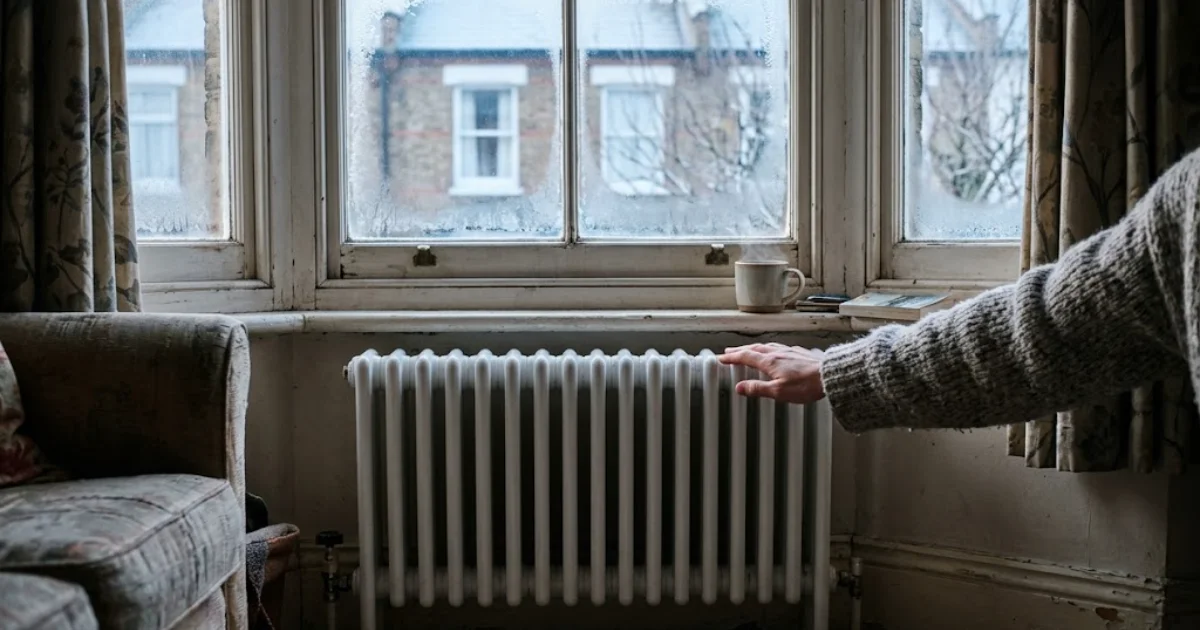
There are few household problems that feel as urgent as a house that will not warm up on a frosty morning. The radiators are cold, the boiler is silent or flashing a code, and everyone wants to know whether this is a two-minute fix or a call to a professional. For homeowners across the UK, a handful of sensible checks can answer that question quickly and safely. This guide walks through them in order, starting with the simplest, and explains where the do-it-yourself line should be drawn. For a fuller reference, Olia’s Plumbing & Heating has also published a practical piece on No Heating in Winter that covers common causes in more depth.
Step 1: Check the basics
Before assuming the boiler has failed, rule out the ordinary explanations.
- Power supply. Is the boiler’s display lit? A tripped fuse, a switched-off fused spur or a power cut can stop a boiler without any fault in the appliance.
- Thermostat and timer. Confirm the programmer is on, the time slot is correct and the room thermostat is set a few degrees above the current temperature. Flat batteries in a wireless thermostat are a surprisingly common cause.
- Gas supply. Check whether your gas hob works. If it does not, there may be a supply problem; contact your gas supplier or network operator.
- Boiler mode. Many boilers have separate heating and hot water settings. Make sure the central heating is switched on rather than just the hot water.
Step 2: Look at the boiler’s pressure gauge
A sealed central heating system needs the right pressure to circulate water. If the needle has dropped below the minimum shown in the manufacturer’s instructions (often around 1 bar when the system is cold), many boilers will lock out as a protective measure.
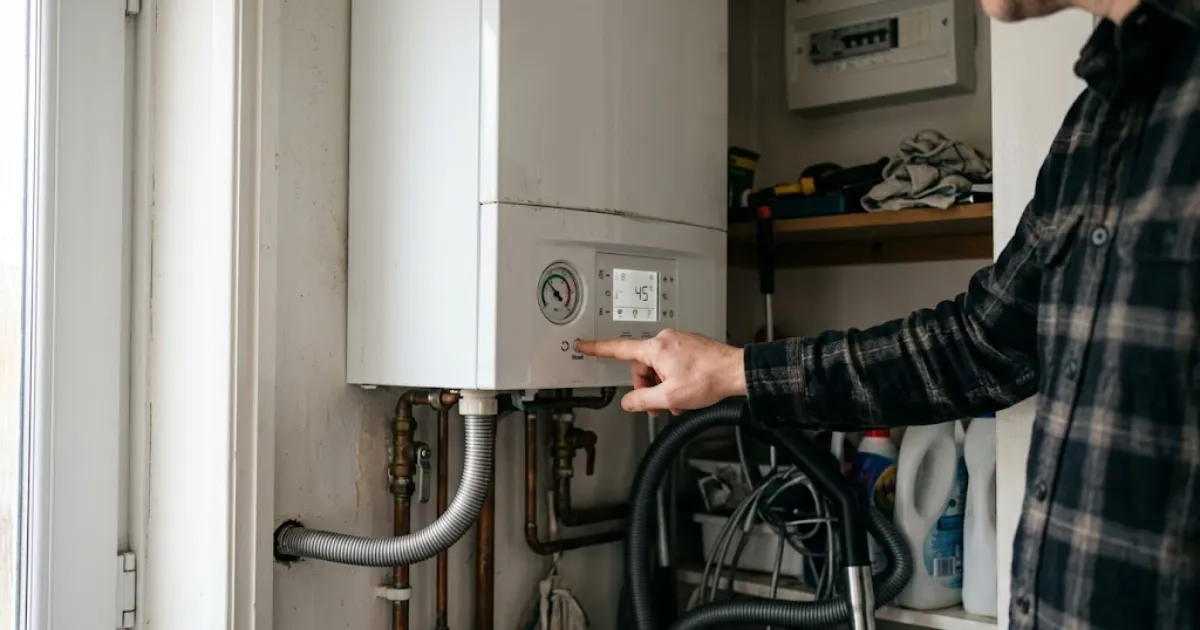
Low pressure can follow bleeding radiators, a small leak, or a fault in the expansion vessel. Many homeowners can repressurise using the filling loop, as described in their boiler manual. If the pressure keeps falling after you have topped it up, stop topping up and ask a professional to find the cause, because the water is going somewhere.
Step 3: Read the display
Modern boilers display fault codes. The manual will tell you what they mean, and many codes indicate problems you can solve safely, such as low pressure or a need to reset after a temporary lockout. Resetting is usually done with a button on the boiler. It is reasonable to try once; if the fault immediately returns, repeated resets will not help and could mask a safety issue.
If the display shows a lockout that returns straight after a reset, it is time to stop and call in a professional. For homeowners in London, boiler repair in Central London from a Gas Safe registered engineer typically starts with a fault diagnosis, a safety check and a plain explanation of what needs fixing, whether that is a diverter valve, a pressure fault or an ignition problem. To arrange an emergency heating repair, contact oliasplumbingandheating.co.uk or call 020 7183 4810 and describe the fault code and the checks you have already made.
Step 4: Think about frozen condensate
In very cold weather, the plastic condensate pipe that carries acidic wastewater from a condensing boiler to a drain can freeze, particularly where it runs outside. The boiler then shuts down, and the display may show a condensate-related code. Typical signs are a gurgling noise and a lockout during a cold snap.
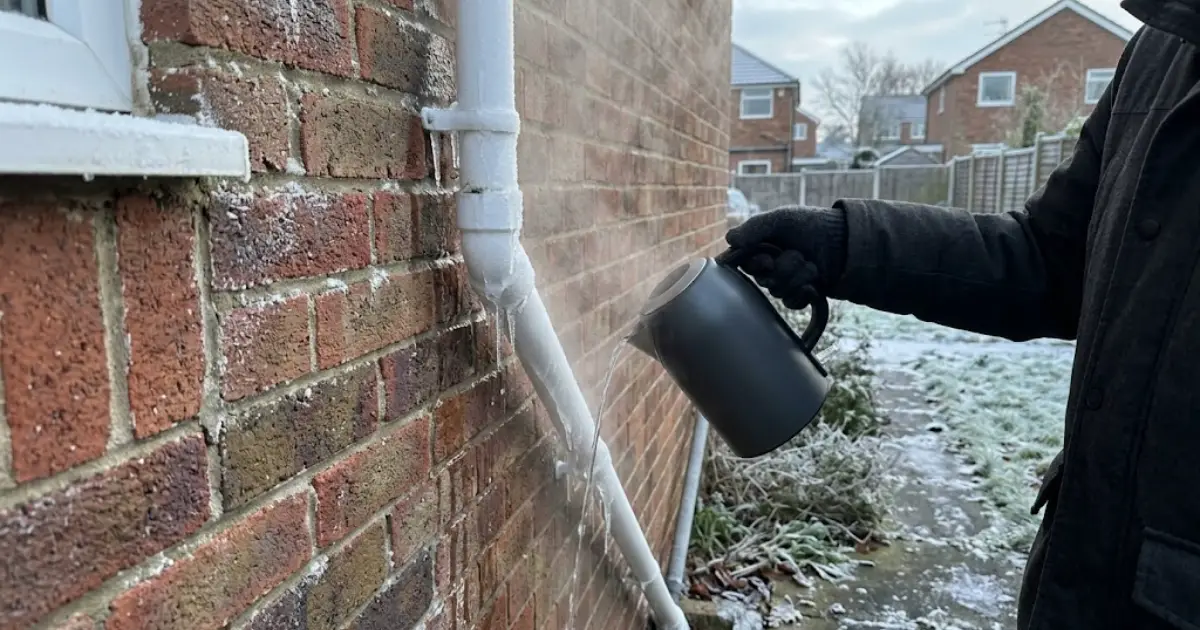
Thawing the pipe with warm, not boiling, water poured over the frozen section often restores operation. Use caution on icy ground, and do not open or alter anything inside the boiler. If the pipe freezes repeatedly, an engineer can reroute or insulate it.
Step 5: Check the radiators
If the boiler is firing but rooms are still cold, look at the radiators. Cold at the top suggests trapped air, cold at the bottom suggests sludge, and one cold radiator among several warm ones may have a stuck valve. Bleeding a radiator is a safe task with a radiator key, and a stuck thermostatic radiator valve can often be freed by removing its head and gently releasing the pin.
What not to do
Some actions are tempting in a cold house and are best avoided:
- Do not remove the boiler casing or try to repair internal components. Gas appliances must only be worked on by registered engineers.
- Do not use a gas oven or hob for heating. It produces carbon monoxide and is dangerous.
- Do not use unflued gas or paraffin heaters in a closed room. Ventilation matters.
- Do not ignore warning signs such as soot, yellow flames, a pilot light that keeps blowing out, or a smell of gas.
Safety first: carbon monoxide and gas leaks
Carbon monoxide is odourless, and symptoms such as headaches, dizziness and nausea can be mistaken for the flu. The Health and Safety Executive’s gas safety guidance explains how to recognise the warning signs and why audible CO alarms matter in homes with fuel-burning appliances.
If you smell gas, open windows and doors, avoid switches and flames, turn off the gas supply at the meter if you can do so safely, and call the National Gas Emergency Service free of charge on 0800 111 999.
When to call a professional
Call a registered engineer if:
- the boiler will not restart after one reset;
- pressure repeatedly drops;
- you hear persistent banging, whistling or gurgling;
- there is visible water leaking from the appliance or pipework;
- the boiler shows a fault code you cannot resolve using the manual.
Always check that the engineer is on the Gas Safe Register, and ask to see the ID card, which lists the appliances they are qualified to work on. Registered engineers are required by law for gas work in Great Britain, and it is the only reliable way to be sure the work is being done safely.
Keeping the warmth in while you wait
While the heating is out, practical measures help limit heat loss: close doors to unused rooms, draw curtains at dusk, use draught excluders, and gather the household in one room. The Energy Saving Trust publishes independent guidance on staying warm affordably, including draught-proofing and controls. If anyone in the home is elderly, very young or in poor health, treat a prolonged heating failure as a priority and consider temporary alternative arrangements.
Preventing next winter’s breakdown
Most winter heating failures have early warnings. A yearly service gives an engineer the chance to spot worn parts before they fail. Bleeding radiators and checking boiler pressure before the cold sets in, insulating exposed condensate pipes and having a magnetic filter fitted all reduce the odds of a cold house at the worst moment.
Three trusted sources worth bookmarking
A cold house is stressful enough without having to hunt for reliable advice. Three independent organisations cover almost everything a homeowner needs. The Health and Safety Executive explains gas safety, carbon monoxide and the legal duties around gas appliances. The Gas Safe Register is the official list of engineers who may lawfully work on gas in Great Britain, and its online check takes a minute. The Energy Saving Trust gives impartial guidance on controls, draught-proofing and running a home efficiently. Keeping these three names to hand turns a stressful evening into a short, orderly list of decisions.
Common myths about a heating failure
- “Turning the thermostat to maximum heats the house faster.” It does not. A boiler heats water at a set rate, so a higher setting only means it runs for longer.
- “A cold radiator always means a broken boiler.” Often it means trapped air, sludge or a stuck valve, all of which are local problems.
- “Topping up the pressure fixes everything.” It only treats the symptom. If the gauge keeps falling, water is escaping somewhere.
- “A gas oven is fine as a stopgap.” It is not. It can produce carbon monoxide and should never be used to heat a room.
A simple winter-readiness plan
Before the first hard frost, spend half an hour on a short routine. Check the boiler pressure while the system is cold, bleed any radiator that is cool at the top, make sure the programmer and thermostat batteries are fresh, and look at the condensate pipe for exposed sections. Note the boiler make, model and fault-code guide in your phone so the details are close when you need them, and save the gas emergency number, 0800 111 999. If the boiler has not been serviced this year, book it now rather than in the first cold week, when engineers are busiest. Thirty minutes of preparation in October can save a very uncomfortable weekend in January.
Summary
When the heating stops, work through the checks in order: power and controls first, then pressure, display codes, frozen condensate and radiators. Know where your own competence ends. Anything involving gas, flues or sealed internal parts belongs with a registered engineer, and a smell of gas always means leaving the property and phoning 0800 111 999.